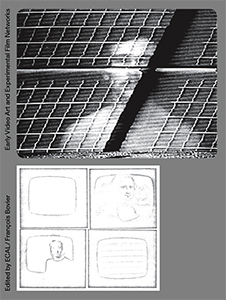
A critical history of a fundamental video art event: the large-scale study of the entire history of Locarno's VideoArt Festival, the culmination of a four-year research project.
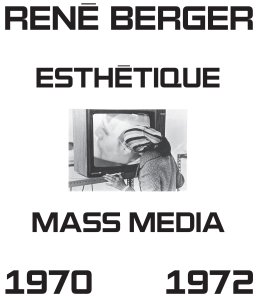
This volume is based on a transdisciplinary research project founded by the Swiss National Science Foundatioun, aimed at renewing our knowledge and understanding of video art—based on a previously unexplored case study, constituting an archaeology of Internet culturenamely the VideoArt Festival Locarno—, both in relation to the dissemination of new media and electronic art, and to theoretical thinking constituting an archaeology of Internet culture. The VideoArt Festival Locarno, directed by the gallerist Rinaldo Bianda, was a pioneering venue for the presentation of video art in Europe between 1980 and 2000. Alongside the presentation of video works, installations, and performances,
René Berger organized theoretical symposia at the highly symbolic site of Monte Verità, bringing together art and film historians, sociologists, theorists, scientists, and artists. In this context, video and new media are viewed as a renewal of the Bauhaus's experiments and teachings.
François Bovier is a lecturer and researcher at the History of Cinema Section of the University of Lausanne (UNIL) and a researcher at the
Lausanne University of Art and Design (ECAL). He is the co-founder of the journal
Décadrages, co-director of the
PlanSécant series (MetisPresses), and co-director of the
Cinétisme series (Les presses du réel).